
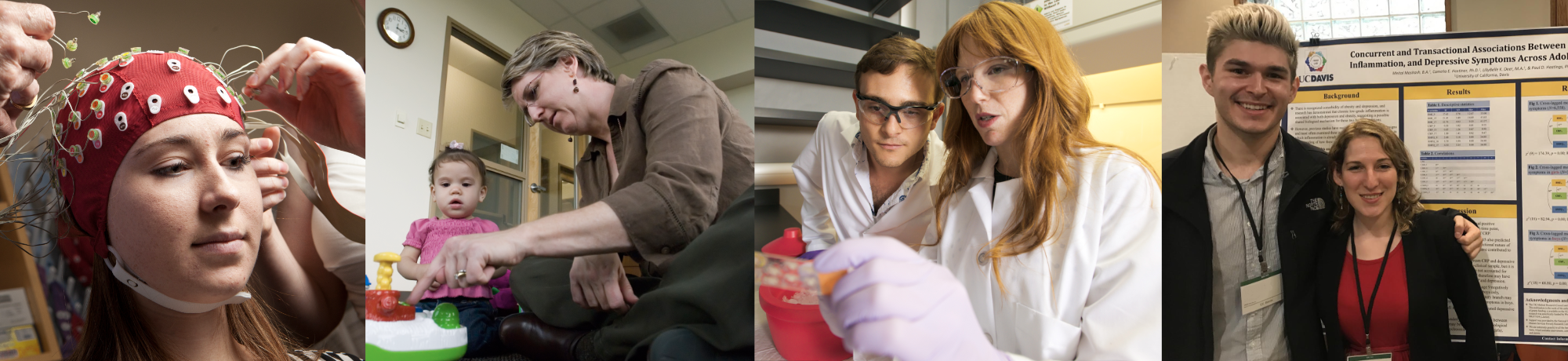

4 image collage depicting psychology research
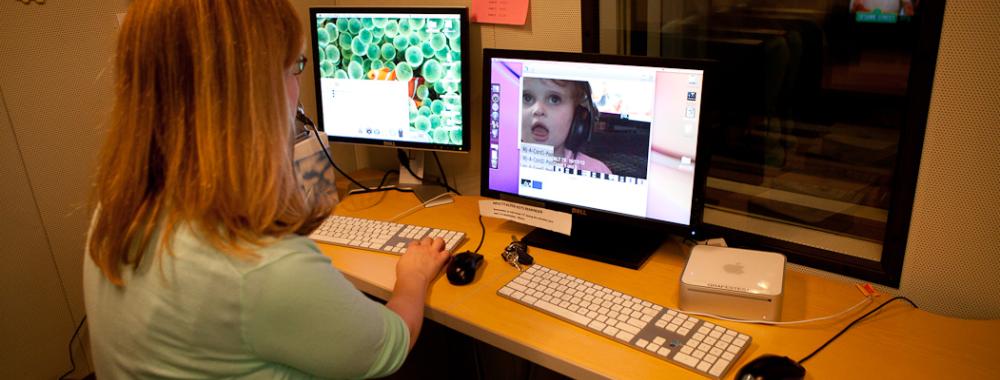
Katie Graf Estes views double screens while she reviews research recordings

Research Areas

The UC Davis Department of Psychology contains five major "areas": Biological Psychology, Developmental, Perception-Cognition, Quantitative and Social-Personality. Boundaries between the areas are fluid, and students are encouraged to take seminars in all five.

Biological Psychology
Developmental Psychology
Perception, Cognition and Cognitive Neurscience
Quantitative Psychology
Social and Personality Psychology

Latest News

Professor Ferreira Receives Clifford T. Morgan Distinguished Leadership Award

Professor Fernanda Ferreira was chosen to receive the Psychonomic Society’s Clifford T. Morgan Distinguished Leadership Award. The award recognizes her outstanding contributions to the field of scientific psychology as well as her sustained leadership and service to the discipline. The award is accompanied by a $1,000 USD prize.

Assistant Professor, Ariel Mosley, named 2022-23 CAMPSSAH Scholar

Mosley is an Assistant Professor of Racial Inequality in the Psychology Department at UC Davis. Her research focuses on how group members navigate their social identities and their worlds, and relate to other groups. She studies how people think about, respond to, and engage in acts of cultural appropriation, or acts of out-group cultural use. In 2020, she received her doctoral degree at the University of Kansas as a member of Monica Biernat's Stereotyping and Judgement Lab.

Psychology Department Ranked #12 Nationally by US News & World Report

We are pleased to announce that the UC Davis Department of Psychology was ranked 12th in the country (tied for 6th among Public Universities) by U.S. News and World Report. The new rankings reflect the growing recognition and positive overall reputation of our department, previously ranked #26 four years prior. The rankings also provide subdiscipline rankings: for Developmental Psychology, our department was ranked 9th overall (7th among public universities).

Psychology Researchers Study Brain Mechanisms of Depression

Although treatments for depression are available, existing treatments are not effective for many who use them. Furthermore, rates of depression are higher in women than in men, yet the cause for this difference is unknown, making their illnesses, at times, more complicated to treat.